


COMPETITION FOR THE BEST SCIENTIFIC PAPER IN THE FIELD OF CONTACTOLOGY
With the aim of encouraging and developing contactology in Serbia and the desire to stimulate creative and scientific research work by young ophthalmologists in the field of contact lenses, the Contact Lens Society of Serbian Ophthalmologists (COLSS) announces a competition for the best scientific paper in this field.
Young ophthalmologists up to 40 years of age, who are also members of the Society, are eligible to participate.
The authors of the two best papers will be sponsored by COLSS to participate in the ECLSO Congress, which will be held from April 24 to 25, 2026, in Vienna. The sponsorship includes early registration fees, travel, and accommodation.
Papers should be submitted to the COLSS Scientific Committee via email at info@colss.rs. Your paper must be accepted by the ECLSO Scientific Committee.
The deadline for abstract submission for ECLSO participation is February 1, 2026.
On behalf of the Presidency,
Prim. Dr. Sci. Med. Danijela Ranđelović
Member of the COLSS Scientific Committee
Authors of individual contributions bear the responsibility for the content and accuracy of information within their texts.
My First International Congress
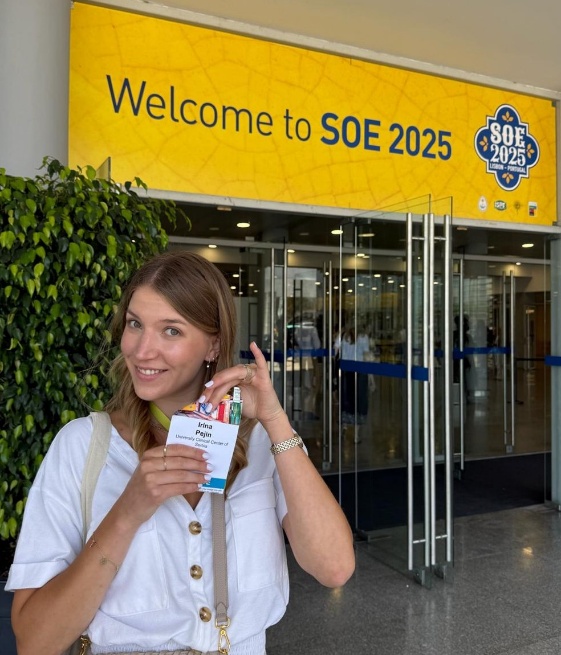
Details from the congress in Lisbon
A s a first-year resident, right at the beginning of the beautiful and noble path of ophthalmology, I heard the Lisbon congress mentioned by colleagues from several sides. In the age of technology, everything is at our fingertips, so I quickly researched what it was all about. Lisbon, June, the Congress of the European Society of Ophthalmology, a congress website vibrant in Portuguese style, a schedule with many different lectures from the entire field of ophthalmology, and interest from my female colleagues as great as my own, were enough to make us decide to attend our first international congress.
I was surprised by the large number of visitors from all over Europe. The huge congress halls, of which there were quite a few, were constantly full of interested ophthalmologists. The schedule was very interesting and divided by subfields. Personally, my biggest problem was choosing which lecture to attend because many that I was interested in were taking place simultaneously.
I didn't go wrong with any of them, as each offered something interesting and new to me. I particularly valued the fact that there were many workshops and lectures tailored for young doctors. In addition to foreign lecturers, I attended presentations by our own ophthalmologists.
Our experts in Lisbon:
It is wonderful to see specialists from our country presenting at such a large congress. It was an honor to listen to Ass. Dr. Jelena Potić, Ass. Dr. Vesna Šobot, and Dr. Tiana Petrović. Among the displayed posters, the works of Prof. Dr. Marija Božić, Prof. Dr. Lepša Žorić, Doc. Dr. Vesna Marić, and Dr. Katarina Janković Terzić stood out.
In addition to new knowledge and expanded horizons, I brought back many beautiful memories, new friendships, and acquaintances from this trip. Lisbon added a special charm to this great experience, and I would gladly return to visit the parts of the city for which there was no time. Given that this is the very beginning of my ophthalmological journey, I am sure there will be reasons to return to Lisbon and renew these beautiful memories.
Prepared by: Dr. Irina Pejin
Case Study
Patient, female, 18 years old, has worn soft contact lenses for 4 years. Recently, the lens has been constantly falling out of the left eye!
Age 14 – ARK (Autorefkeratometry):
OD: -4.25 = -0.25 x 122; 42.00 D / 43.25 D -1.25 Dcyl
OS: -4.25 = -0.50 x 176; 42.00 D / 43.50 D -1.50 Dcyl
Rx soft contact lenses: OU: 8.60/14.2/-4.0 VOD/VOS = 1.0
Age 18 – ARK (Autorefkeratometry):
OD: -4.50 = -0.25 x 143; 42.00 D / 43.25 D -1.25 Dcyl
OS: -4.75 = -1.75 x 169; 42.25 D / 44.50 D -2.25 Dcyl
* Progression of astigmatism is noted in the left eye. Consequently, correction with a soft toric lens was attempted, but unsuccessfully. The marker was at 3.5 h, with a fit that remained too loose even after 15 minutes in the waiting room! It was impossible to apply the LARS rule!
* Standard autorefkeratometers do not cover the entire cornea.
Recommendation – Corneal Topography: Irregularity in the steeper meridian of the OS. Recommendation: Correction with an RGP contact lens.
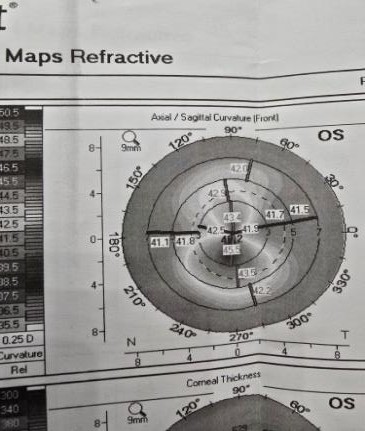
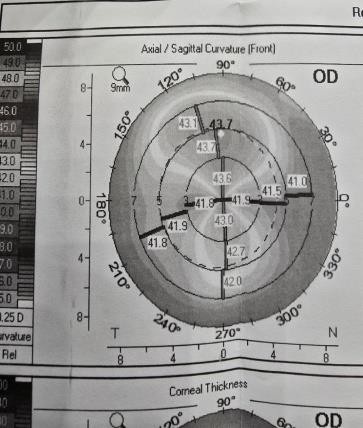
Rx RGP aspheric: OU: 7.90/ 9.4/ -4.0; VOD/VOS = 1.0
Advice: Follow-up exam in 3 months!
Dg: OD: ASTIGMATISMUS MYOPICUS COMPOSITUS DIRECTUS. / OS: KERATOCONUS ANTERIOR INCIPIENS.
Prepared by: Dr. Ivan Bogosavljević
Scleral Contact Lenses
Scleral contact lenses are large-diameter RGP contact lenses that rest entirely on the bulbar conjunctiva and vault over the cornea. Indications for their use include irregular corneas, ocular surface diseases, and they can also be applied for cosmetic purposes. The most important indication within the group of irregular corneas is primary corneal ectasia, with keratoconus being the most prominent.
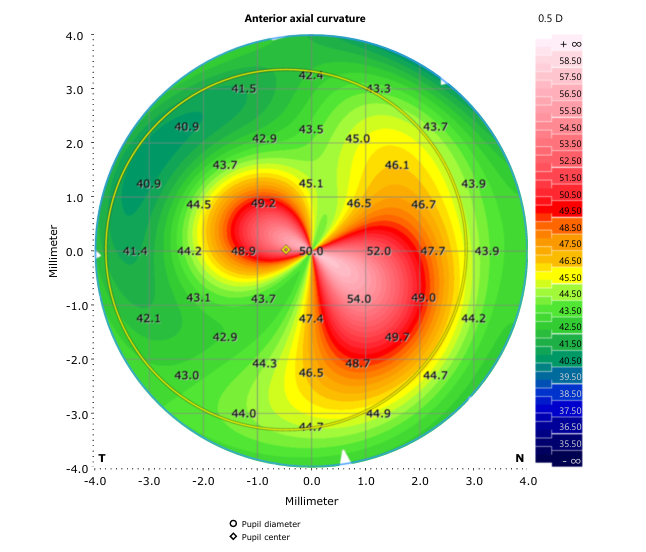
A representative case from our clinical practice is presented here. The patient is a 25-year-old with keratoconus who underwent a cross-linking procedure due to disease progression. The best-corrected visual acuity after the procedure was 0.6. With scleral contact lens correction, the patient achieves a visual acuity of 1.0 and experiences exceptional comfort.
Scleral contact lenses are an excellent choice for irregular corneas, providing significantly better visual acuity. They offer good comfort, and with an adequate fit and regular monitoring, they can be worn for years, similar to standard RGP contact lenses.
Prepared by: Dr. Miljana Marjanović
It Still Works
A group of scientists from Sydney, Australia, compared the sensitivity of Pseudomonas aeruginosa strains isolated from patients with Pseudomonas aeruginosa keratitis to five antibiotics (ciprofloxacin, levofloxacin, gentamicin, ceftazidime, and imipenem) and two commercially available multi-purpose solutions (MPS) for contact lens disinfection—one without and one containing proteolytic enzymes. The Minimum Inhibitory Concentration (MIC) and Minimum Bactericidal Concentration (MBC) were measured for all five antibiotics and both MPS.
The results were a great relief for both contact lens wearers and practitioners. All 23 isolated strains of Pseudomonas aeruginosa from keratitis patients were 100% susceptible to the disinfecting effects of both MPS. However, the MPS with proteolytic enzymes achieved the same MIC and MBC at a 50% lower concentration than the "standard" MPS.
All tested strains of Pseudomonas aeruginosa were 100% susceptible to levofloxacin and gentamicin. The sensitivity levels for ciprofloxacin, imipenem, and ceftazidime were 52.2%, 30.4%, and 91.3%, respectively.
Prepared by: Dr. Nikola Jagodić
Mastering Myopia
It is no wonder we often feel that everything regarding myopia treatment is already clear and that there are no dilemmas about who, when, and how to treat for nearsightedness. However, scientists worldwide continue to study potential new causes, methods of prevention, and ways to slow down the progression of this increasingly widespread problem caused by the excessive elongation of the eyeball. In the first spring issue of CONTACT LENS SPECTRUM, Kate Gifford introduces us to the latest trends in myopia treatment.
Trend 1: Treating "Pre-myopia": Children at risk of developing myopia are termed "pre-myopes." They usually present with multiple risk factors, including a family history of myopia, specific visual habits, and environmental conditions during their visual development—such as prolonged near-work and limited time spent outdoors (Flitcroft et al, 2019).
One indicator that can predict with high certainty whether a child will become myopic is if they are less farsighted than is normal for their age. Results from the well-known CLEERE study conducted in North America established a "hyperopic reserve" threshold for pre-myopia: for a 6-year-old child, this boundary is a minimum of +0.75D in cycloplegia (Zadnik et al, 2015). Delaying the onset of myopia by just one year has a greater impact on the final degree of myopia than two to three years of treatment aimed at slowing the progression of existing myopia (Bullimore and Brennan, 2023).
Trend 2: Light Therapy: RLRL (Repeated Low-level Red Light) therapy involves exposing a child's eyes to low-intensity red light at a wavelength of 650nm for 3 minutes, twice a day. This has shown impressive results in slowing eyeball elongation and the progression of nearsightedness. Combining this treatment with other optical methods (such as Orthokeratology) is recommended, though not in conjunction with atropine (Eyerising International, 2025). Questions regarding its long-term safety remain (Ostrin and Schill, 2024).
Significant work is being done in the field of myopia control, and many proven, highly effective treatments are already available. We in Serbia do not need to fall behind in implementing these advancements.
Prepared by: Dr. Nikola Jagodić
For Those Who Can't Stand Glasses
Low-dose Aspirin for antiplatelet effect, low-concentration atropine for myopia control, and now the US FDA has approved a low concentration (0.4% solution) of pilocarpine hydrochloride for topical ocular use in the treatment of presbyopia (Qlosi). It has been available on the US market since last year.
There will certainly be interested customers for this drug, as there are more than 120 million people in the US who require presbyopia correction. Qlosi can be administered daily or only as needed; it induces miosis as early as 20 minutes after instillation, which can last up to 8 hours.
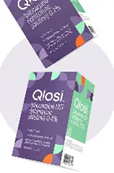
Miosis improves near vision through a mechanism that a member of our Society, Dr. Ljilja Nikolić, has always utilized – it increases the "depth of focus" (EDOF) rather than inducing ciliary muscle spasm and accommodation. Thus, the therapeutic effect of this treatment comes without a negative impact on distance vision. The drops are preservative-free, and it is recommended that if the workday is long, a second drop be administered 2–3 hours after the first dose.
Unlike the previously FDA-approved (2021) 1.25% pilocarpine HCl solution (Vuity; Allergan), the lower concentration of the active component in Qlosi makes it safer, though whether it is equally effective remains to be fully established.
Prepared by: Dr. Nikola Jagodić
Not Just a Common Nuisance
The Demodex mite, one of the causes of Rosacea, is a parasite that lives in and around human hair follicles, feeding on dead skin cells and sebum. When its habitat is in and around the eyelash follicles (after the age of 50, every second person has a Demodex infestation), it can cause blepharitis, conjunctivitis, Meibomian gland dysfunction, and even keratitis.
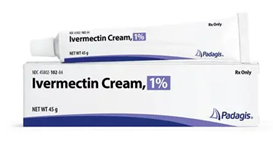
Their numbers can be controlled with regular use of products containing tea tree oil (TTO) extract, but these cannot eradicate Demodex unless the TTO solution is in at least a 50% concentration, which causes unbearable irritation to the eyelid and eyes.
Ivermectin, an antiparasitic drug popular since Covid, when formulated as a 1% cream and rubbed onto the eyelid margins and skin once a week for 15 minutes, eradicates Demodex after just 12 treatments. Applied this way in a clinical setting, it is very well tolerated.
Prepared by: Dr. Nikola Jagodić
Is EPI-OFF becoming a thing of the past? FDA approves Epioxa system
The U.S. Food and Drug Administration (FDA) has approved the topical application of the Epioxa system by Glaukos for corneal cross-linking in patients with keratoconus. This system does not require the prior removal of the corneal epithelium (Epi-On).
The therapy is based on the topical application of two bioactive eye drop formulations, catalyzed by supplemental oxygen in two riboflavin concentrations (Epioxa and Epioxa HD), and UV light emitted from specialized goggles.
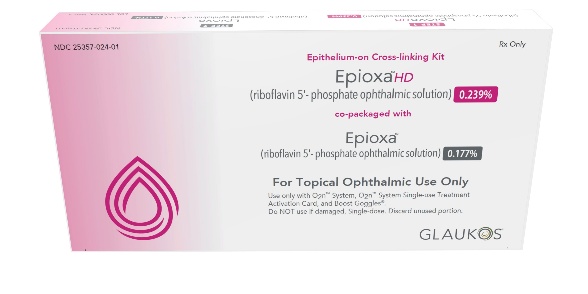
The FDA approved this medical device and drug combination based on two prospective, randomized, double-blind, multicenter studies involving more than 400 patients with progressive keratoconus.
Commercial availability of this therapy is expected in the U.S. in the first quarter of next year, and in Europe by 2028. As a reminder, Glaukos registered the Photrexa system in 2016, which is the standard cross-linking procedure involving epithelial removal (Epi-Off).
Prepared by: Dr. Nikola Jagodić
Piggyback sistem kontaktnih sočiva – praktični osvrt
Piggyback sistem podrazumeva istovremenu primenu mekog i RGP sočiva na istoj rožnjači. Ovakav pristup najčešće se koristi kod pacijenata sa keratokonusom, postoperativnim promenama ili ožiljnim zamućenjima, kada je površina rožnjače nepravilna.
Meko sočivo u ovom sistemu ima ulogu zaštitnog i stabilizujućeg sloja, koji povećava udobnost i toleranciju nošenja, dok RGP sočivo obezbeđuje preciznu optičku korekciju i oštrinu vida.
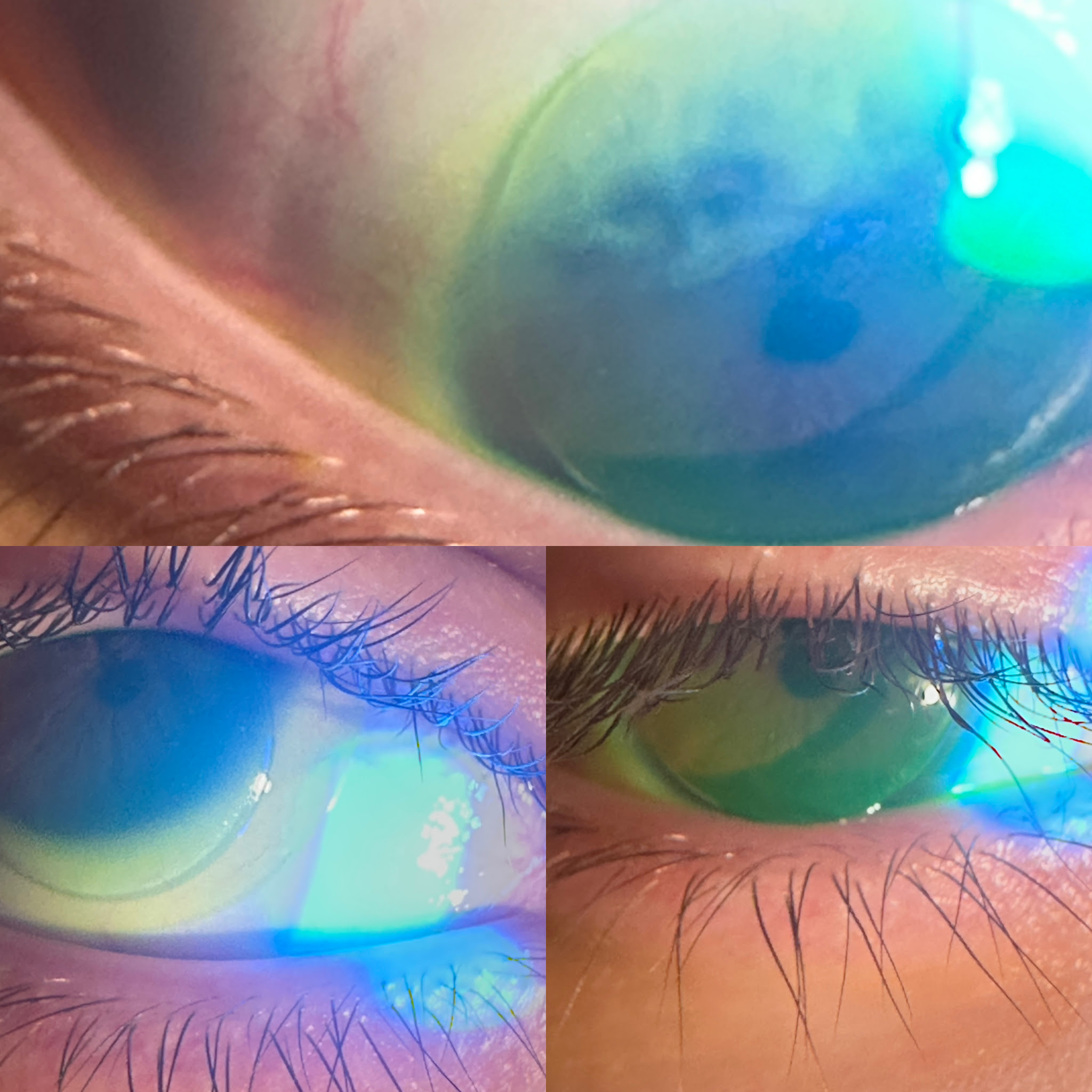
Kod pacijenata, na primer, sa ožiljkom nakon hirurškog zahvata na rožnjači, piggyback sistem često omogućava značajno poboljšanje vidne oštrine uz veći komfor u odnosu na samostalno RGP sočivo.
Pri proceni fita preporučuje se upotreba visokomolekularnog fluoresceina, kako bi se sprečilo prelaženje boje ispod mekog sočiva i omogućila realna procena interakcije i razmaka između slojeva. Posebnu pažnju treba obratiti na ukupnu propustljivost kiseonika i rizik od infekcije, koji je povećan zbog složenijeg režima održavanja i manipulacije.
Redovna kontrola i dosledna higijena ključni su za bezbednu i uspešnu primenu piggyback sistema u svakodnevnoj kliničkoj praksi, pa stoga ovu metodu treba koristi kod pažljivo odabranih pacijenata.
Priredila: dr Katarina Janković Terzić
Exceptional Quality and Vision Stability with Maximum Comfort for Patients with Astigmatism
The prevalence of astigmatism among individuals requiring vision correction is 1 in 2. However, the representation of toric lenses among contact lens users is exceptionally low, even though fitting toric contact lenses achieves significantly better vision quality than lenses with a spherical equivalent, even for low cylinders. As many as 51% of standard toric lens wearers experience discomfort, and 1 in 4 stops wearing them within the first year.
But not all toric lenses are the same! It has been clinically proven that advanced next-generation lenses featuring water surface technology and new designs provide exceptional vision quality and stability alongside maximum comfort. On average, they stabilize in less than 60 seconds and within 3 degrees of ideal orientation, with less than 5 degrees of rotation during blinking—nearly 100% of patients achieve optimal lens centration and mobility.
This toric contact lens design ensures a fitting success rate of 95% with the very first pair, thereby reducing fitting time and significantly easing the contactologist's work. Beyond vision quality, advanced toric lenses with a water surface feature silicone hydrogel material with a water gradient. This ensures the eye does not touch the contact lens itself but rather a pleasant moisture cushion, providing exceptional comfort even after 16 hours of wear.
COLSS Expert Team
Silicone Hydrogel Contact Lenses – Therapeutic Purpose
Contact lenses play an important role in the therapeutic treatment of corneal and ocular surface diseases. For this purpose, the FDA has issued approvals for specific materials that allow for high oxygen permeability and tissue protection.
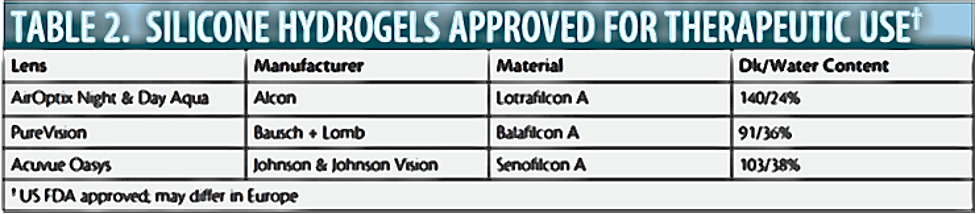
Balafilcon A contact lenses are indicated for therapeutic use in the following conditions:
- For corneal protection: Entropion, trichiasis, tarsal scarring, recurrent corneal erosion, and post-surgical ptosis.
- For pain relief: Bullous keratopathy, epithelial erosion and abrasion, filamentary keratitis, post-keratoplasty.
- As protection during healing: Chronic epithelial defects, corneal ulcers, neurotrophic and neuroparalytic keratitis, chemical burns.
- Post-surgical conditions: LASIK, PRK, PK, PTK, lamellar grafts, and other conditions following surgical interventions.
COLSS Expert Team
Advantages of GP Multifocals
Current advancements in manufacturing technology and the development of new GP lens designs provide ophthalmologists with even more options to satisfy patients' high demands for visual acuity. GP lenses are synonymous with clear vision and good ocular health, and they are typically more cost-effective to purchase.
When asked about visual acuity in one study, as many as 75% of patients with astigmatism preferred the performance of gas-permeable lenses over soft ones. Multifocal GP lenses have also been shown to provide better vision quality than soft multifocals.
Advantages of Multifocal Gas-Permeable Lenses:
- Superior Optical Acuity: GP lenses maintain their shape, providing sharper and more stable correction for both distance and near vision.
- Better Control of Astigmatism and Aberrations: They provide more precise correction for irregular astigmatism because the lens does not conform to the shape of the eye.
- Durability and Performance Stability: Material resistance extends the optical stability of the profile over time.
- Individually Customizable Design: Adjustment of central and peripheral zones according to the specific needs of the patient.
- Better Oxygen Supply to the Eye: High oxygen permeability (Dk) supports corneal health.
Types of Multifocal GP Designs:
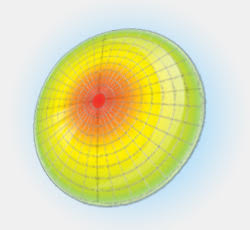
Aspheric Multifocal Design combines the principles of simultaneous and translational viewing, while the aspheric back surface guarantees comfort.
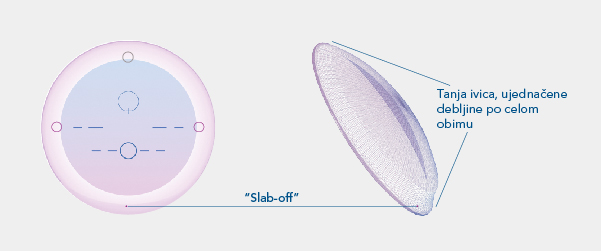
Segmented Translating Design utilizes lens movement when the direction of gaze changes. When a patient looks down to read, the lower eyelid holds the lens in place while the pupil slides into the near-vision zone.
2. Michaud L, et al. Eye Cont Lens. 2018;44(3):164-9.
Prepared by: Aleksandar Nikolić
Announcement of Professional Meetings


Date: November 28, 2025 – London

Date: June 5-7 – Birmingham

Date: March 8-9 – Eindhoven

Date: January 7-10 – Las Vegas